
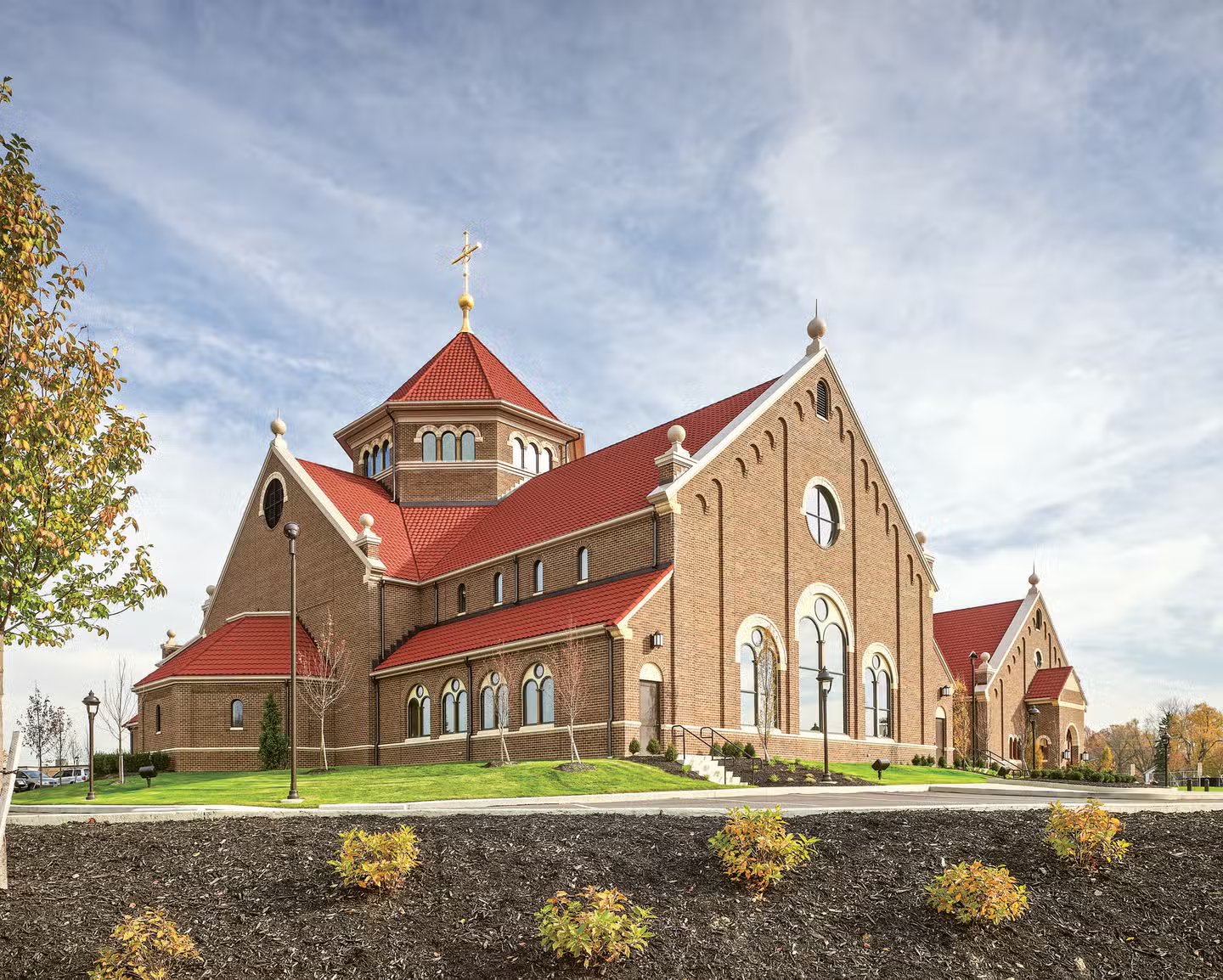
Religious and Non-Profit Organizations in Greenville
Religious and Non-Profit Organizations in Greenville
Religious and Non-Profit Organizations for Greenville commercial buildings. Roof inspection, documentation, repair, maintenance, and replacement planning.
Commercial roofing scope for community facilities managing roof decisions through committees.
We look at Religious and Non-Profit Organizations through the building below it: inventory, patients, tenants, students, employees, guests, or production lines that need protection. On a religious and non-profit organizations call, we ask for roof age, leak locations, tenant restrictions, roof access, rooftop equipment notes, and the event that made the roof question urgent. For Religious and Non-Profit Organizations, our job is to separate emergency protection from capital planning so a wet ceiling tile does not turn into a rushed replacement and an aging roof does not get patched without checking the deck and insulation.
For Religious and Non-Profit Organizations, the South Carolina Building Codes Council adopted the 2021 South Carolina Building Codes on October 6, 2021 with an effective date of January 1, 2023. That local detail matters for Religious and Non-Profit Organizations because Greenville roof work often sits between downtown occupied buildings, I-85 logistics roofs, Golden Strip retail centers, GSP-area warehouses, and manufacturing campuses that cannot stop operations while a roof is open. We plan Religious and Non-Profit Organizations around staging, material movement, access, odor, noise, and daily dry-in before the first crew day is scheduled.
The field review for Religious and Non-Profit Organizations starts with membrane, seams, laps, edges, curbs, drains, scuppers, wall transitions, previous repair chemistry, roof traffic, and the interior leak map. We do not use Religious and Non-Profit Organizations as a label for guessing. If a Religious and Non-Profit Organizations roof has trapped moisture, loose edge metal, backed-out fasteners, split pitch pockets, or overflow problems, those conditions go into the file before we recommend repair, coating, recover, or replacement.
For Religious and Non-Profit Organizations, VisitGreenvilleSC groups Travelers Rest, Taylors, and Greer as North Greenville towns and Mauldin, Simpsonville, and Fountain Inn as the Golden Strip. A Religious and Non-Profit Organizations roof near Inland Port Greer, a CU-ICAR lab building, an Augusta Road retail property, and a West End office do not have the same access problem or tolerance for disruption. The Religious and Non-Profit Organizations plan needs to match the building use, which means the scope should explain where material lands, how the roof stays watertight each day, and what happens if weather arrives before a section is complete.
We treat storm exposure as part of Religious and Non-Profit Organizations, not as a separate sales category. Greenville Religious and Non-Profit Organizations roofs see hard rain, humid heat, thunderstorm wind, and occasional hail. When we review Religious and Non-Profit Organizations after weather, we check metal edges, coping joints, membrane bruising, rooftop-unit fins, open seams, displaced ballast, drainage paths, and interior evidence so the owner can see the difference between cosmetic marks, urgent defects, and long-term risk.
For Religious and Non-Profit Organizations, the City of Greer describes its position between Atlanta and Charlotte along Interstate 85 in both Greenville and Spartanburg Counties. That Religious and Non-Profit Organizations fact is useful because commercial roofing in the Upstate is tied to transportation, manufacturing, healthcare, retail, office, school, and public-sector buildings. A Religious and Non-Profit Organizations recommendation that ignores loading docks, shift changes, tenant entryways, medical schedules, or campus events can cost more in disruption than it saves on paper.
The technical file for Religious and Non-Profit Organizations should include roof area, deck type, membrane type, insulation clues, existing layer count, drainage slope, attachment assumptions, perimeter conditions, and manufacturer questions. We keep certification and warranty language out of the Religious and Non-Profit Organizations file unless it is verified by the building owner or manufacturer. The owner should be able to compare a Religious and Non-Profit Organizations repair, restoration, recover, or replacement option without sorting through invented proof.
For Religious and Non-Profit Organizations, the South Carolina Inland Port Greer flyer identifies the terminal as part of the Greenville-Spartanburg port of entry. We keep South Carolina code assumptions in the right lane for Religious and Non-Profit Organizations by noting permit triggers, insulation discussions, fire classification questions, wind securement, and whether the roof can legally and practically be recovered. On Religious and Non-Profit Organizations, a small missing detail in the estimate can become a large change order if layer count, wet insulation, or edge securement is ignored.
Budget and Next-Step Documentation
Budget planning for Religious and Non-Profit Organizations works best when each line item has a roof reason. A repair should identify the failed detail. A Religious and Non-Profit Organizations maintenance recommendation should name the repeat tasks. A Religious and Non-Profit Organizations coating option should show adhesion, moisture, and thickness assumptions. A Religious and Non-Profit Organizations recover plan should explain why the existing roof can remain. A Religious and Non-Profit Organizations replacement scope should describe tear-off, deck review, insulation, dry-in, edge metal, drains, safety, and closeout documents.
We write Religious and Non-Profit Organizations notes so the next decision is easier to defend. For Religious and Non-Profit Organizations, the file should include labeled photos, likely water-entry points, immediate containment, practical repair recommendations, remaining-service-life concerns, budget risk, and any unknowns that require core sampling, infrared review, manufacturer input, or a return visit after rain. The person approving Religious and Non-Profit Organizations should not need a separate translation call to know what the roof is telling us.
The next step for Religious and Non-Profit Organizations is simple: send the Religious and Non-Profit Organizations address, roof age if known, leak photos, access instructions, tenant limits, and any past reports. We will map a Religious and Non-Profit Organizations roof walk for Greenville, collect evidence, and explain the safest path from immediate protection to a responsible commercial roofing scope for vendor documentation, budget timing, and operating risk and a roofing file that supports approval.
What information should we send before a Religious and Non-Profit Organizations roof walk?
Send the building location, roof age if known, access instructions, leak photos, tenant restrictions, and any prior roof reports. For Religious and Non-Profit Organizations, those details help us arrive with the right inspection focus and safety plan.
Can Religious and Non-Profit Organizations be handled while the building stays occupied?
Often yes, but the answer depends on access, odor, noise, material staging, and how much roof must be opened. We phase Religious and Non-Profit Organizations work around dry-in, tenant protection, and the operating schedule below the roof.
How do we compare repair, coating, recover, and replacement for Religious and Non-Profit Organizations?
We compare evidence. Moisture, layer count, deck condition, drainage, age, storm exposure, and future use decide whether Religious and Non-Profit Organizations belongs in a repair file, a restoration plan, a recover option, or a replacement budget.
Do you promise manufacturer certification or insurance approval for Religious and Non-Profit Organizations?
No. We do not invent credentials or promise claim outcomes. We document conditions, identify manufacturer or warranty questions, and keep contractor-side Religious and Non-Profit Organizations documentation tied to reviewable roof facts.
What makes Greenville planning different for Religious and Non-Profit Organizations?
The mix of I-85 logistics, Inland Port Greer, GSP Airport, downtown offices, Golden Strip retail, healthcare, campuses, and older industrial buildings changes access and risk. We plan Religious and Non-Profit Organizations around the building and the business underneath it.
- Insurance Restoration
- Logistics 3PL
- Education Facilities
- Food Processing Cold Storage
- Aerospace Defense Roofing
- Standing Seam Metal Roofing
- Industrial Warehouse Roofing
- Mixed Use Roofing