
Airport Terminal & Aviation Facility Roofing in Greenville
Airport Terminal & Aviation Facility Roofing in Greenville
Airport terminal and aviation facility roofing in Greenville, SC. Large low-slope terminal decks, jet-blast and wind uplift, dense HVAC, and 24/7 operations around GSP and Donaldson Center.
Airport Terminal and Aviation Facility Roofing in Greenville, SC
An airport never closes, and that single fact shapes everything about roofing one. Greenville-Spartanburg International Airport sits on the Upstate's I-85 spine between Greenville and Spartanburg, moving passengers on American, Delta, and United through a terminal that operates around the clock and a cargo and general-aviation campus that does the same. Every access point, every material lift, and every crew deployment on a property like this has to be cleared through the airport's facilities department and its FAA Part 139 safety program before it happens, and in secured areas through TSA protocols as well. We work that coordination into the scope before the contract is signed rather than discovering it at mobilization.
The Upstate is a deeper aviation market than its size suggests. Donaldson Center, the former Air Force base south of downtown Greenville now repurposed for industrial and aviation manufacturing, anchors a cluster of hangars, maintenance operations, and aerospace work that puts a steady stream of high-bay aviation buildings in our path alongside the passenger terminal itself.
Why a Terminal Roof Is Not a Big Warehouse Roof
From the air a terminal looks like a large flat box, but the roof carries demands a logistics building never sees. The airside portions take jet blast, the high-velocity exhaust off taxiing aircraft, which means the membrane adhesion and any ballast have to be specified well beyond what a comparable building inland would need or the system peels at the edges. The decks are large, long, and close to dead flat, so drainage design is unforgiving and ponding tolerance is essentially zero; a low spot that would be a nuisance elsewhere becomes a structural and warranty problem on a terminal. We correct drainage with tapered insulation and design the system so water leaves the roof rather than sitting on it.
Wind matters as much as jet blast. Open airfield exposure means higher uplift across the whole roof, and the perimeter and corner zones in particular need fastening or adhesion engineered to that exposure rather than a standard pattern. These are buildings where the edge details earn their keep in the first big storm.
HVAC Density and 24/7 Operations
Terminal mechanical systems are far denser and heavier than standard commercial, which means a higher count of curbed penetrations, larger equipment, and more flashing touchpoints that all have to stay watertight over a roof that can never be fully taken offline. Our pre-project survey documents every penetration, curb height, and mechanical clearance before we build the work plan, and oversized equipment curbs and complex through-penetrations get flashing details engineered individually rather than pulled from a standard sheet. Because the building runs continuously, the work gets phased into approved windows, with material deliveries and any crane lifts scheduled around airfield operations and coordinated through the FAA NOTAM process where required.
Debris Control and the Details Where Glass Meets Roof
Foreign object debris is a safety issue at an airport in a way it is not on an ordinary commercial site. Loose fasteners, insulation scraps, and offcuts that blow off a roof near an active apron can damage an aircraft or an engine, so our airside work uses contained staging, tethered tools and material, and an end-of-shift sweep that is part of the procedure rather than an afterthought. The other detail that defines terminal roofing is the transition where the roof meets the tall curtainwall and clerestory glazing that modern terminals use for daylight. Those long glass-to-roof joints move with temperature and are a frequent leak source, so we treat them as engineered transitions tied into the membrane and the building's drainage, not as a strip of standard wall flashing.
Hangars, Cargo, and the Rest of the Aviation Campus
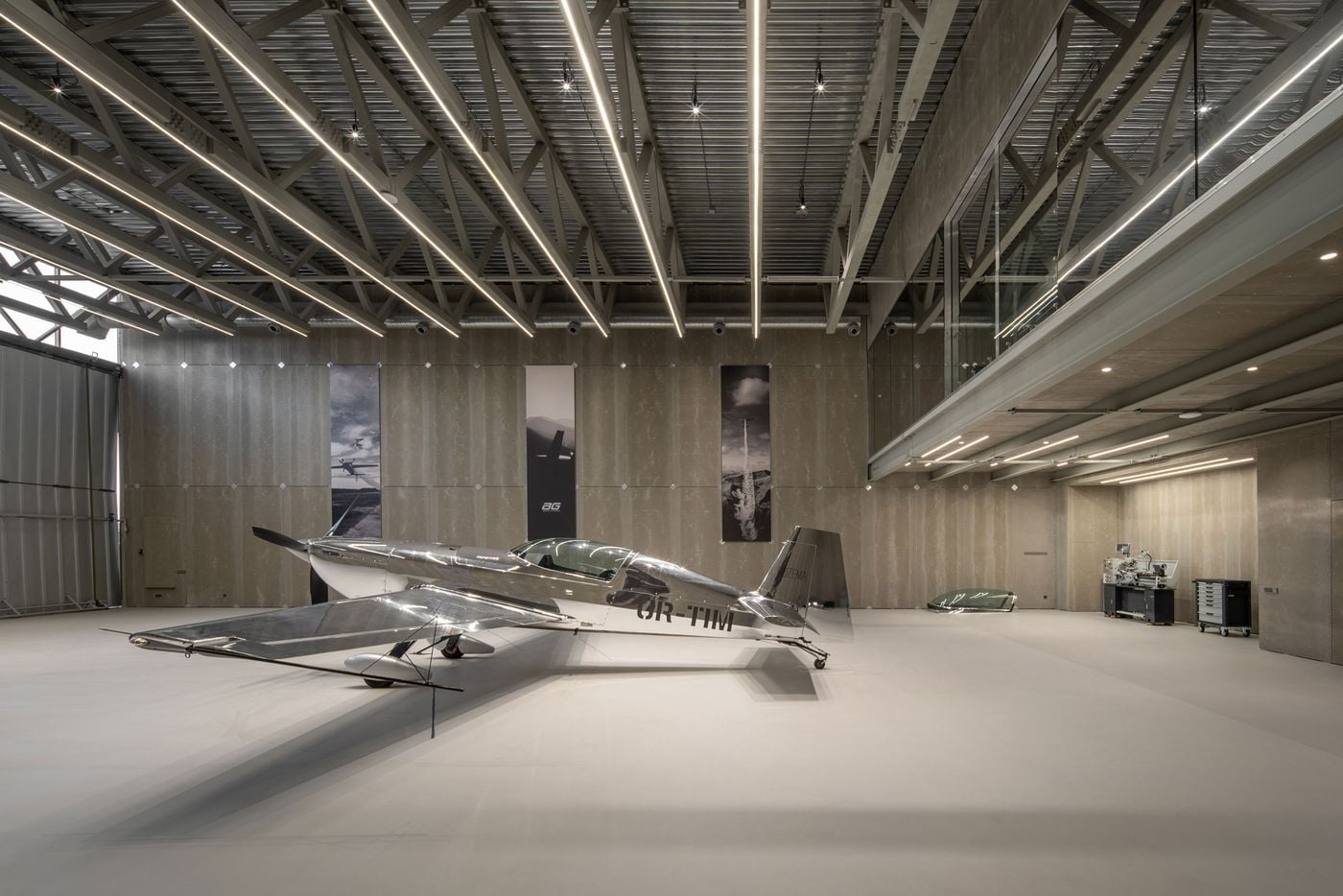
The terminal is only part of the work. Cargo facilities, rental-car centers, fixed-base operator buildings, aircraft-maintenance hangars, and the hotels that sit on airport-adjacent land each bring their own roofing profile, and the airport coordination and badging requirement does not relax just because the building is not the terminal. High-bay hangars are their own challenge: large clear-span structures, often pre-engineered metal or wide-flange steel, that generate serious uplift and thermal movement and frequently call for standing-seam metal with seam geometry and fastening matched to the building. For the general-aviation and reliever side, including Donaldson Center, the security protocols are lighter than the passenger terminal but the buildings are often more demanding structurally. We specify and install across that whole range, and we plan crew credentialing for any airside work into the bid timeline because no crew member goes airside without confirmed authorization.
Common Questions About Airport and Aviation Roofing in Greenville
How do you schedule work at an operating airport like GSP?
We develop a phased plan with the airport facilities department and the FAA Part 139 coordinator and get it approved by airport operations. Material deliveries, crane lifts, and any work near airside areas are scheduled into approved windows and run through the FAA NOTAM process where required. The airport never closes, so this phasing is a standard part of how we set up the job, not an exception.
What roof systems are standard for a large terminal deck?
Most terminal re-roofing uses a TPO or PVC single-ply membrane over a tapered insulation system that corrects drainage and eliminates ponding on the near-flat deck. For new high-bay aviation structures and hangars, standing-seam metal is often the right choice. We finalize the specification after walking the roof with your facilities engineer and confirming the deck, load capacity, and operational constraints.
How do you deal with jet blast and wind on airside roofs?
Airside membranes need adhesion and ballast specified beyond a typical building because jet blast and open-field wind exposure drive much higher uplift, especially at the perimeter and corners. We engineer the attachment to that exposure rather than using a standard pattern, which is what keeps the edges down in a storm.
Can your crews work airside near active aprons and gates?
Yes, with full badging and in coordination with airfield operations. Airside work requires additional pre-planning and crew credentialing, which we build into the bid timeline. We do not mobilize anyone airside without confirmed authorization, and we treat that as a baseline requirement rather than something to ask forgiveness for later.
Do you handle hangars for FBOs and general aviation?
Yes. High-bay hangar roofing, whether a single private bay at Donaldson Center or a multi-unit FBO complex, is a regular part of our aviation work. These wide-clear-span structures have specific uplift and thermal-movement behavior, and we specify and install roof systems matched to how they actually move.
- Fire Station Roofing
- Multi Tenant Retail Strip Roofing
- Higher Education Roofing
- Convenience Store Roofing
- Pharmaceutical Lab Roofing
- Office Building Roofing
- EPDM Commercial Roofing
- Hail Damage Restoration