
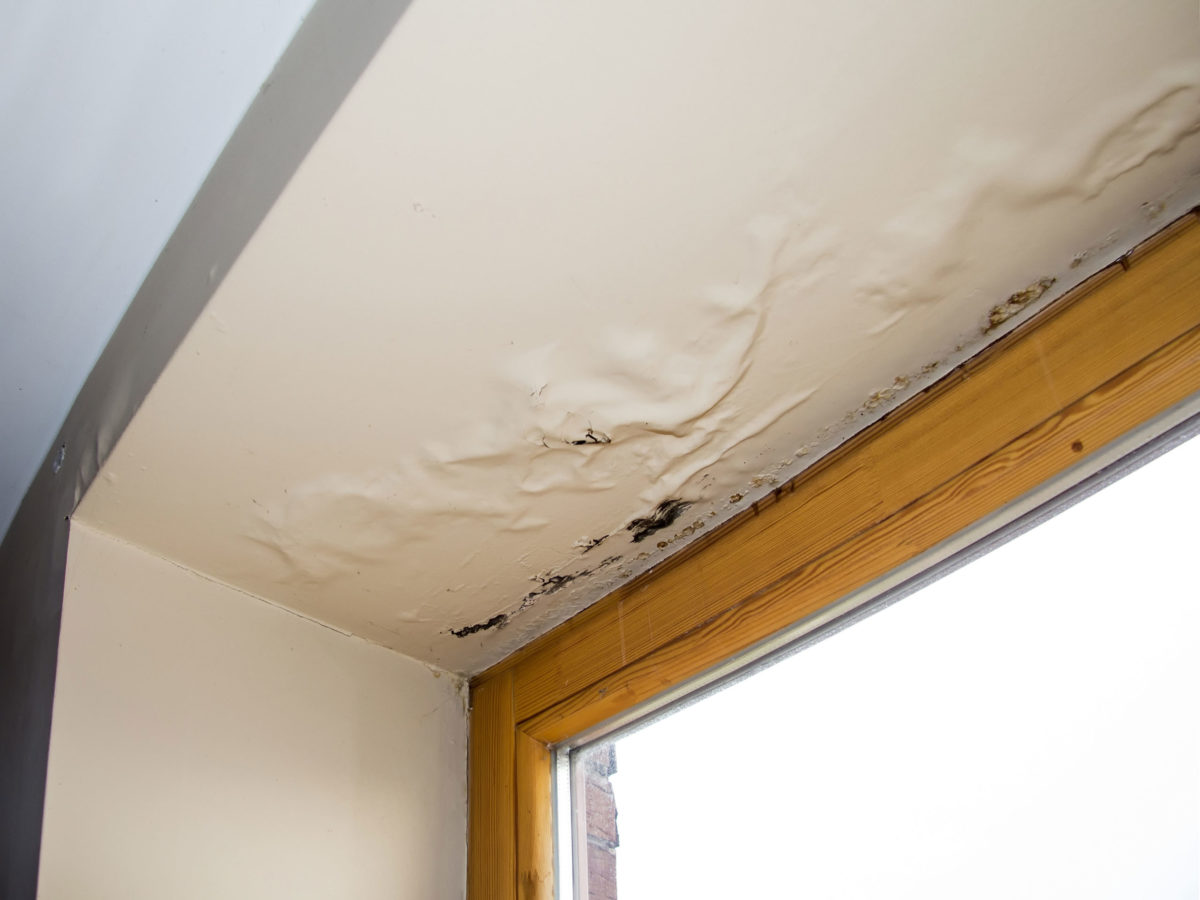
Humidity & Trapped-Moisture Roof Repair in Greenville
Humidity & Trapped-Moisture Roof Repair in Greenville
Greenville, SC commercial roof repair for humidity damage: blistering, ridging, saturated insulation, and failed vapor barriers. Infrared diagnosis and vapor-correct repairs.
When the Damage Comes From Inside the Building, Not the Rain
Some of the worst roof problems we find in Greenville never started with a leak. They started with humidity. The Upstate runs warm and damp for much of the year, and on buildings that hold a lot of interior moisture, that water vapor pushes up through the roof assembly from below and condenses where it meets a cooler surface inside the insulation. No storm, no obvious breach, and yet the insulation slowly soaks, the deck begins to corrode, and the membrane lifts off its substrate. We see this play out on laundries and food-service spaces around the Augusta Road and Pelham Road corridors, on indoor pools and fitness facilities, and on older manufacturing buildings off Pleasantburg and along the I-385 spur where the original vapor control was never designed for how the building gets used today.
What Humidity Damage Looks Like on the Roof
Vapor-driven failure shows up in a handful of recognizable patterns, and by the time they are visible the assembly is usually compromised well beyond the spot you noticed first.
- Blistering. Vapor pressure building under the membrane lifts it into bubbles. They are not cosmetic; each blister is a thin, brittle spot waiting to split open.
- Ridging and buckling. Moisture migrating through insulation joints expands and contracts, telegraphing long ridges up through the membrane along the board seams.
- Saturated insulation. Wet insulation loses nearly all of its R-value, so the building loses conditioned air through the roof and HVAC runs harder to keep up.
- Deck corrosion. On steel decks, constant moisture rusts the deck from above until it perforates, which turns a roofing problem into a structural one.
You cannot judge humidity damage from the surface, because the membrane above wet insulation often looks fine. Infrared moisture scanning is the right tool. We scan during the evening cool-down, when insulation that soaked up heat during the day reads warmer than the dry material around it, and the saturated zones map out as distinct hot areas on the thermal image. Then we confirm with core cuts at the flagged spots, which also tell us the insulation's compression, the deck's condition, and exactly where the vapor retarder sits. On Greenville buildings that have not had a documented moisture survey in three years or more, we push for one as part of any serious assessment, because wet insulation caught early is a patch and wet insulation caught late is a tear-off.
The Vapor Barrier Problem at the Root of It
Most chronic humidity damage in this climate traces back to a vapor retarder that is missing, torn, or simply in the wrong place. In the Upstate's warm, humid pattern, vapor generally drives upward from the conditioned interior toward the roof, which means the vapor control layer belongs low in the assembly, near the deck, where it can stop that vapor before it reaches a cold condensing surface higher up. When the retarder is above the insulation, or absent on a high-humidity building that badly needs one, you have effectively built a moisture trap. This is why we will not simply recover a humidity-failed roof. Laying a fresh membrane over a misplaced vapor layer just rebuilds the exact same failure in a brand-new system, and the owner pays for it twice.
The infrared map decides this, not guesswork. When the wet insulation sits in defined zones with sound, dry material around them, we can do a targeted cut-and-patch: open the membrane over the wet area, pull and replace the saturated insulation and any rusted deck beneath it, correct the vapor detailing in that zone, then weld the membrane back in and reseal the surrounding flashings. Once saturation runs past roughly a quarter to a third of the roof, or once deck corrosion is widespread, patching stops making economic sense and full replacement with a properly designed vapor strategy is the honest recommendation. We give you the survey, the wet-area percentage, and a side-by-side of repair versus replacement so the choice is yours and it is informed.
Humidity damage does not hold still. Wet insulation provides no thermal resistance, so energy cost climbs while the problem grows, and on a steel deck the corrosion compounds with every additional damp season. A roof showing fifteen percent wet coverage today, left alone through a couple more Upstate summers, can easily read forty or fifty percent at the next look, and a manageable repair quietly becomes a full replacement. Acting on the first signs is almost always the cheaper path.
Drainage and Detailing That Make It Stick
A humidity repair that ignores water management will not last. We check that tapered insulation still drains to the drains and scuppers rather than ponding over the patch, reseal lifted edge metal and coping where moisture has already corroded the fasteners, and make sure penetrations and curbs in the repair area are flashed to hold. The goal is a repair that addresses why the assembly failed, not just the symptom that finally became visible.
Questions Greenville Owners Ask
How do you find moisture that isn't visible from the surface?
Infrared scanning. We run the thermal survey after sunset, when wet insulation that held the day's heat reads warmer than the dry material around it and maps out as distinct zones. Core cuts at those spots confirm the saturation, the deck condition, and where the vapor retarder actually sits.
Why does moisture get trapped inside the roof in a humid climate?
In the Upstate, vapor tends to drive upward from the conditioned interior. If the vapor retarder is missing, damaged, or sitting above the insulation instead of down near the deck, that vapor condenses inside the insulation when it hits a cooler surface, saturating it and rusting the deck without a single drop of rain getting through the membrane.
Can a humidity-damaged roof be repaired instead of replaced?
Often, yes, when the wet insulation is confined to defined zones with dry material around them. We cut out the saturated insulation and any corroded deck, correct the vapor detailing locally, and weld the membrane back in. Once wet coverage passes roughly a quarter to a third of the roof, or the deck is widely corroded, full replacement is the sounder call.
How quickly does it get worse if we wait?
Faster than most owners expect. Wet insulation spreads, energy costs rise as R-value disappears, and steel-deck corrosion accelerates each damp season. Fifteen percent wet coverage now can become forty or fifty percent within a couple of years, turning a repair into a replacement.
Will you just recover over the old roof to save money?
Not on a humidity failure. Recovering over a misplaced or missing vapor barrier rebuilds the same trap in the new assembly and the damage returns. We correct the vapor strategy as part of the work so the repair actually holds.
Request Roof Walk