
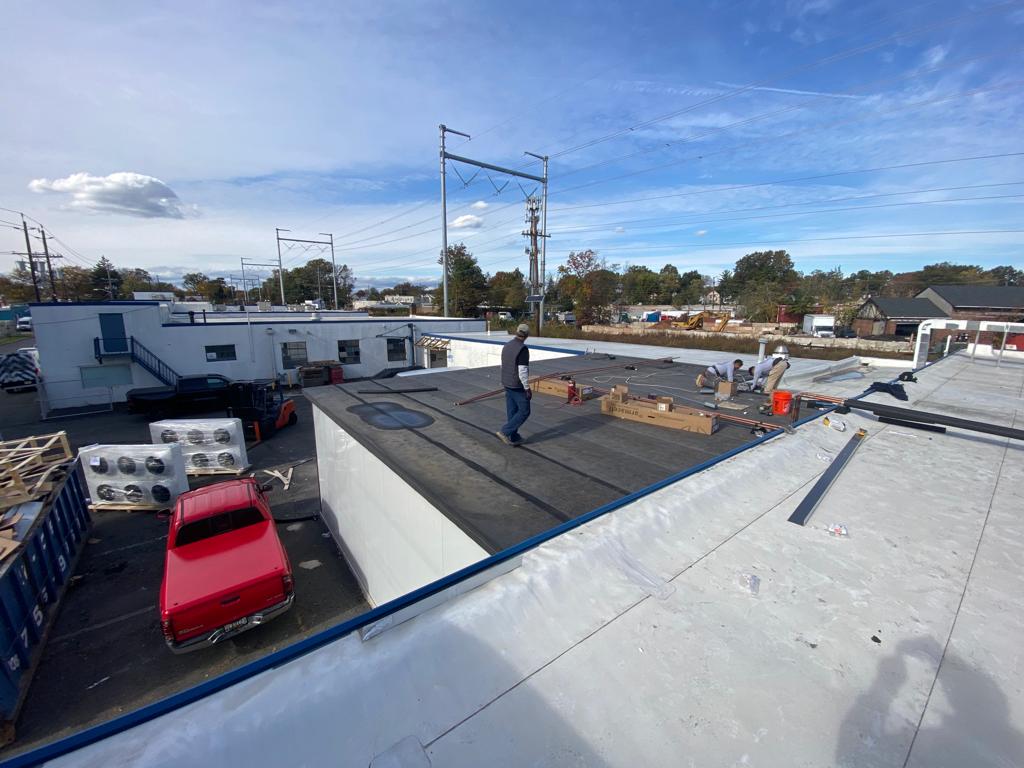
Food Processing Roofing in Greenville
Food Processing Roofing in Greenville
Food processing facility roofing in Greenville, SC for washdown humidity, refrigeration loads, and USDA/FDA material requirements. Production-schedule sequencing and vapor-controlled assemblies.
A Roof That Has to Pass a Food Safety Audit, Not Just Keep Rain Out
Food and beverage production has deep roots in the Upstate, from long-standing operations off Augusta Road and the Donaldson industrial area to the newer processing and packaging plants that have filled the industrial parks along the I-85 corridor toward Greer and Mauldin. These plants are not ordinary buildings, and a roof leak over an active line is not a maintenance ticket. It is a potential food-safety event that pulls in the plant's QA team, can put product on hold, and lands in the regulatory record. We plan food processing roofing in Greenville to keep that from happening in the first place, rather than to clean it up afterward.
Washdown Humidity Works on the Roof From Below
The thing generalist roofers underestimate on a processing plant is how much moisture lives inside the building. High-pressure sanitation washdown, cooking and blanching steam, and constant interior humidity all rise and press against the underside of the deck. Combine that with Greenville's already humid subtropical summers and you get a strong vapor drive into the roof assembly nearly year-round. If the assembly is not built with the right vapor control for that drive, moisture condenses inside the insulation and quietly corrodes the steel deck with no surface leak to warn anyone. We design the assembly around the interior environment, not just the weather above it.
Refrigeration and Rooftop Loads Stack Up Fast
Processing plants carry heavy rooftop equipment, and a lot of it serves the cold side of the operation. Freezer rooms, chill rooms, and blast-freezing areas demand condensing units, large air handlers, and refrigeration lines, all of which add concentrated load and dozens of penetrations to the roof. Above those refrigerated spaces the roof assembly also has to maintain the thermal continuity of the cold chain so condensation does not form inside the assembly. We design tapered insulation over refrigerated areas around the actual operating temperatures and the local vapor drive. Get the insulation or the vapor retarder wrong here and the failure shows up as deck corrosion and saturated insulation long before anyone sees a drip.
Membrane and Materials Have to Be Cleared for Food Production
Material selection on a USDA- or FDA-regulated plant starts with what is acceptable over a food production environment, not with what is cheapest. Not every commercial membrane is approved for use above food-contact zones. White TPO and PVC are generally acceptable over enclosed processing areas, but the specific formulation and installation method still have to square with the plant's food safety plan. The same scrutiny applies to the adhesives, primers, and sealants in the flashing details. Many standard roofing adhesives are solvent-based and are not acceptable in a food production setting. We confirm acceptability with the plant's QA team before anything goes over a production area.
The Production Schedule Drives Everything
Greenville processing plants commonly run two or three shifts, and the only real access window is the weekly sanitation period when the line is down and being cleaned. Any work that opens the envelope above an active production area has to live inside that window, and we will not begin until the production team and QA manager confirm the floor below is clean and protected. We build the phasing plan around your run schedule rather than asking you to bend production around the roof. Where work touches refrigerated areas, we coordinate with the refrigeration maintenance team on anything that could affect cold-chain continuity.
When Something Goes Wrong Over a Live Line
If a leak develops above an active line, the first call is to your QA and facilities team for product-hold evaluation and documentation, not just a patch. Our emergency response for food plants includes 24-hour contact, priority mobilization for temporary dry-in, and the documentation support your incident reporting requires. We hand off emergency contact information as part of every project closeout so your team is not scrambling at 2 a.m.
What Greenville Processing Plants Get From Us
- Vapor-controlled assemblies designed for washdown and process humidity driving up against the deck, not just rain above.
- Cold-chain-aware insulation over freezer, chill, and blast-freezing rooms, designed around real operating temperatures.
- Food-safe materials, with membrane, adhesives, primers, and sealants confirmed acceptable with your QA team.
- Sanitation-window sequencing keyed to your shift schedule, with floor protection verified before work starts.
- Inspection-ready records that document roof condition and repairs for USDA and FDA facility audits.
Whether you run a packaging plant in the Donaldson area, a beverage operation off the I-85 corridor, or a cold-side processor near Greer, we will design the assembly for the moisture inside your building, sequence the work around your line, and keep the materials and documentation defensible to your auditors.
Food Processing Facility Roofing Questions
Can any roofing material be used over food production areas?
No. USDA- and FDA-regulated plants require the membrane, adhesives, primers, and sealants to be confirmed acceptable for food production before installation, and that is not uniform across products. We identify your regulatory framework and confirm material acceptability with your QA team before specifying anything over a food-contact zone.
How do you schedule work in an active plant?
Most plants run shifts that leave only a weekly sanitation window for work above the line. We coordinate with your facilities manager to use that window and any planned shutdowns, and we confirm the floor below is clean and protected before starting. Work over refrigerated areas is coordinated with your refrigeration maintenance team.
How do you handle drainage above refrigerated rooms?
Ponding water over a freezer adds thermal load and contributes to deck corrosion over time. We specify tapered insulation that drives water to perimeter scuppers or interior drains at the low point of each bay, and we confirm the drainage layout matches the refrigeration system serving the space below.
What happens if a leak occurs during production?
A leak above an active line means an immediate call to your QA and facilities team for product-hold evaluation and documentation. Our food-plant emergency response includes 24-hour contact, priority mobilization for temporary dry-in, and documentation support for your incident reporting. We provide emergency contact details at every closeout.
Do you support USDA and FDA facility inspections?
Yes. Roof condition is a standard inspection item, and inspectors look for evidence of leaks, condensation, or deterioration above production areas. We provide condition documentation and repair records your QA manager can produce to show proactive roof maintenance.
- Airport Terminal Roofing
- Veterinary Clinic Roofing
- Big Box Retail Roofing
- Government Municipal Roofing
- Senior Living Facility Roofing
- Occupied Building Reroofing
- University Campus Roofing
- Standing Seam Metal Roofing